---
license: other
license_name: qwen-research
base_model:
- Qwen/Qwen-Image-2.1-Turbo
base_model_relation: quantized
pipeline_tag: text-to-image
library_name: gguf
tags:
- gguf
- qwen
- image-generation
- comfyui
- comfyui-gguf
- mlx
- fp8
- nvfp4
---
# Qwen-Image-2.1 Turbo Quantized
[](https://abenzerps.com/request-a-model/)
[](https://github.com/abenzerps)
**The base model, [Qwen-Image-2.1-Turbo](https://huggingface.co/Qwen/Qwen-Image-2.1-Turbo), natively supports uncensored image generation.** No built-in safety checker or content filter is applied, and no special settings are needed.
**1024 × 1024 generation takes approximately 10–20 seconds on GPU after warm-up, depending on hardware.**
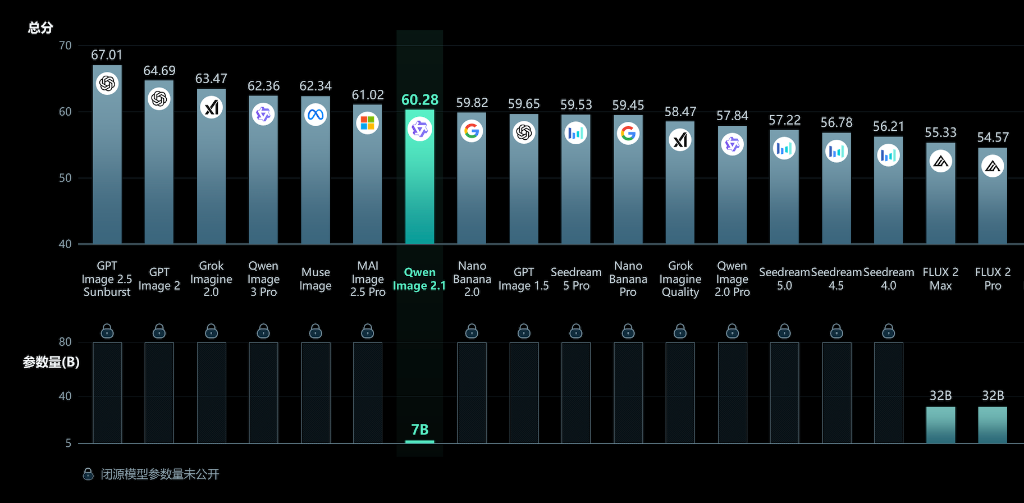
- **Base Model:** [Qwen/Qwen-Image-2.1-Turbo](https://huggingface.co/Qwen/Qwen-Image-2.1-Turbo) · **7B** visual generation architecture
- **Turbo Generation:** **8 denoising steps** · upstream default **CFG = 1**
- **Available Formats:** **GGUF** · **FP8 / INT8 ConvRot / NVFP4 Safetensors** · **MLX 4-bit / 6-bit / 8-bit**
## Turbo Quantized Files
| **Quantization** | **File** | **Size** |
| --- | --- | ---: |
| FP8 | [**qwen-image-2.1-turbo-fp8.safetensors**](https://huggingface.co/abenzerps/Qwen-Image-2.1-Turbo-Quantized/blob/main/qwen-image-2.1-turbo-fp8.safetensors) | 7.13 GB |
| INT8 ConvRot | [**qwen-image-2.1-turbo-int8_convrot.safetensors**](https://huggingface.co/abenzerps/Qwen-Image-2.1-Turbo-Quantized/blob/main/qwen-image-2.1-turbo-int8_convrot.safetensors) | 7.26 GB |
| NVFP4 | [**qwen-image-2.1-turbo-NVFP4.safetensors**](https://huggingface.co/abenzerps/Qwen-Image-2.1-Turbo-Quantized/blob/main/qwen-image-2.1-turbo-NVFP4.safetensors) | 4.20 GB |
| MLX 4-bit | [**qwen-image-2.1-turbo-MLX-4bit.safetensors**](https://huggingface.co/abenzerps/Qwen-Image-2.1-Turbo-Quantized/blob/main/qwen-image-2.1-turbo-MLX-4bit.safetensors) | 4.00 GB |
| MLX 6-bit | [**qwen-image-2.1-turbo-MLX-6bit.safetensors**](https://huggingface.co/abenzerps/Qwen-Image-2.1-Turbo-Quantized/blob/main/qwen-image-2.1-turbo-MLX-6bit.safetensors) | 5.78 GB |
| MLX 8-bit | [**qwen-image-2.1-turbo-MLX-8bit.safetensors**](https://huggingface.co/abenzerps/Qwen-Image-2.1-Turbo-Quantized/blob/main/qwen-image-2.1-turbo-MLX-8bit.safetensors) | 7.56 GB |
| Q8_0 | [**qwen-image-2.1-turbo-Q8_0.gguf**](https://huggingface.co/abenzerps/Qwen-Image-2.1-Turbo-Quantized/blob/main/qwen-image-2.1-turbo-Q8_0.gguf) | 7.59 GB |
| Q6_K | [**qwen-image-2.1-turbo-Q6_K.gguf**](https://huggingface.co/abenzerps/Qwen-Image-2.1-Turbo-Quantized/blob/main/qwen-image-2.1-turbo-Q6_K.gguf) | 5.88 GB |
| Q5_K_M | [**qwen-image-2.1-turbo-Q5_K_M.gguf**](https://huggingface.co/abenzerps/Qwen-Image-2.1-Turbo-Quantized/blob/main/qwen-image-2.1-turbo-Q5_K_M.gguf) | 4.94 GB |
| Q4_K_M | [**qwen-image-2.1-turbo-Q4_K_M.gguf**](https://huggingface.co/abenzerps/Qwen-Image-2.1-Turbo-Quantized/blob/main/qwen-image-2.1-turbo-Q4_K_M.gguf) | 4.05 GB |
| Q4_0 | [**qwen-image-2.1-turbo-Q4_0.gguf**](https://huggingface.co/abenzerps/Qwen-Image-2.1-Turbo-Quantized/blob/main/qwen-image-2.1-turbo-Q4_0.gguf) | 4.05 GB |
**Choosing a format:** Start with **Q4_K_M** for GGUF or **INT8 ConvRot** for ComfyUI Safetensors. See **Usage** for runtime instructions and model setup.
## Text Encoders & VAE
Companion model files packaged for ComfyUI:
| **Type** | **File** | **Precision** | **Size** |
| --- | --- | --- | ---: |
| Text Encoder | [**text_encoders/qwen3vl_8b_bf16.safetensors**](https://huggingface.co/abenzerps/Qwen-Image-2.1-Turbo-Quantized/blob/main/text_encoders/qwen3vl_8b_bf16.safetensors) | BF16 | 17.53 GB |
| Text Encoder | [**text_encoders/qwen3vl_8b_int8_convrot.safetensors**](https://huggingface.co/abenzerps/Qwen-Image-2.1-Turbo-Quantized/blob/main/text_encoders/qwen3vl_8b_int8_convrot.safetensors) | Int8 | 9.35 GB |
| VAE | [**vae/qwen_image_2.1_vae_bf16.safetensors**](https://huggingface.co/abenzerps/Qwen-Image-2.1-Turbo-Quantized/blob/main/vae/qwen_image_2.1_vae_bf16.safetensors) | BF16 | 0.68 GB |
## Usage
| I want to use… | Choose… |
| :--- | :--- |
| **ComfyUI** | **GGUF** or **FP8 / INT8 ConvRot / NVFP4 Safetensors** |
| **A command-line runtime** | **GGUF** or supported **Safetensors** with **stable-diffusion.cpp** |
| **MLX / MFLUX** | **MLX 4/6/8-bit**; follow the setup below |
**Recommended Turbo baseline:** **Euler · CFG 1.0 · 8 steps with the official sigma schedule · 1024 × 1024 · batch 1**. Keep the seed fixed when comparing results. Start with **Q4_K_M** for GGUF or **INT8 ConvRot** for Safetensors.
ComfyUI — GGUF & Safetensors
Update [ComfyUI](https://github.com/Comfy-Org/ComfyUI) and open **Qwen Image 2.1 Turbo — Text to Image** in the Template Library ([official workflow JSON](https://github.com/Comfy-Org/workflow_templates/blob/main/templates/image_qwen_image_2_1_turbo_t2i.json)). Use the **Turbo** template to keep its correct sampling schedule.
Download **one diffusion model**, the **text encoder**, and the **VAE** from the tables above:
| Component | File | Folder inside ComfyUI |
| :--- | :--- | :--- |
| Diffusion — choose one | `qwen-image-2.1-turbo-Q4_K_M.gguf` **or** `qwen-image-2.1-turbo-int8_convrot.safetensors` | `models/diffusion_models/` |
| Text encoder | `qwen3vl_8b_int8_convrot.safetensors` | `models/text_encoders/` |
| VAE | `qwen_image_2.1_vae_bf16.safetensors` | `models/vae/` |
Restart ComfyUI after adding the files. Open the template's subgraph to access its internal loaders if needed.
**Safetensors**
1. In **Load Diffusion Model** (`UNETLoader`), select your Turbo `.safetensors` file and leave `weight_dtype` at **default**.
2. In **Load CLIP**, select the text encoder and set `type: qwen_image`. Select the VAE in **Load VAE**.
3. Enter your prompt and run. Leave optional prompt enhancement off for the initial setup.
**GGUF**
Install [leejet/ComfyUI-GGUF](https://github.com/leejet/ComfyUI-GGUF) using ComfyUI's Python environment, then restart:
```bash
git clone https://github.com/leejet/ComfyUI-GGUF custom_nodes/ComfyUI-GGUF
python -m pip install -r custom_nodes/ComfyUI-GGUF/requirements.txt
```
1. Replace **Load Diffusion Model** with **Unet Loader (GGUF)** and select your `.gguf` file.
2. Reconnect its **MODEL** output to the same downstream input, keeping the template's **Qwen Image 2.1 Cache** and sampler chain.
3. Select the same text encoder and VAE as above, then run. The text encoder still uses the regular **Load CLIP** node with `type: qwen_image`.
Keep the cache at **auto / default**. Try **2048 × 2048** for more detail once the initial setup works. It needs more memory and time; model file size is not total VRAM use. If memory is insufficient, reduce resolution or use a smaller GGUF; `--lowvram` is another option.
**FP8:** The included file has corrected scaling keys and was tested with the standard ComfyUI loader and stable-diffusion.cpp. Keep `weight_dtype` at **default** in ComfyUI.
Turbo sampling — the exact eight-step schedule
Keep **ManualSigmas → SamplerCustomAdvanced** from the official template:
```text
1.0, 0.978453, 0.95418, 0.926626, 0.89508, 0.845148, 0.704534, 0.414568, 0
```
Nine sigma values define **eight steps**. Setting a regular KSampler to eight steps with `simple` does not reproduce this schedule. At **CFG 1**, negative prompts have no effect. The full Turbo checkpoint needs no additional Turbo or Lightning LoRA.
Command-line usage — GGUF & Safetensors
**1. Install the runtime**
Use a current [stable-diffusion.cpp release](https://github.com/leejet/stable-diffusion.cpp/releases) for your operating system, or build it from source. The Bash commands below build the NVIDIA CUDA version; install Git, CMake, a C++ compiler, and the CUDA Toolkit first:
```bash
git clone --recursive https://github.com/leejet/stable-diffusion.cpp
cd stable-diffusion.cpp
cmake -S . -B build -DCMAKE_BUILD_TYPE=Release -DSD_CUDA=ON
cmake --build build --config Release -j
```
On Apple Silicon, replace `-DSD_CUDA=ON` with `-DSD_METAL=ON`. For a CPU-only build, omit that option.
**2. Download the three required files**
Choose **one Turbo diffusion model**, the text encoder, and the VAE from the tables above. Put them inside the runtime directory:
```text
stable-diffusion.cpp/
├── build/bin/sd-cli
└── models/
├── qwen-image-2.1-turbo-Q4_K_M.gguf
├── qwen3vl_8b_int8_convrot.safetensors
└── qwen_image_2.1_vae_bf16.safetensors
```
**3. Generate an image**
Run from `stable-diffusion.cpp/`:
```bash
./build/bin/sd-cli \
--diffusion-model models/qwen-image-2.1-turbo-Q4_K_M.gguf \
--llm models/qwen3vl_8b_int8_convrot.safetensors \
--vae models/qwen_image_2.1_vae_bf16.safetensors \
--sigmas qwen-image-2.1-turbo \
--steps 8 --cfg-scale 1.0 --sampling-method euler \
--width 1024 --height 1024 --seed 42 \
--offload-to-cpu \
-p "A natural light portrait photograph" -o output.png
```
The result is saved as **`output.png` in the current directory**. Replace the prompt with your description. On Windows, the built executable is typically `build\bin\Release\sd-cli.exe`; it accepts the same arguments.
**4. Switch to Safetensors**
Download `qwen-image-2.1-turbo-int8_convrot.safetensors` into `models/` and change only the `--diffusion-model` filename. Keep the text encoder, VAE, and Turbo sampling settings unchanged.
MLX — MFLUX (4 / 6 / 8-bit)
Use **MFLUX** with these MLX weights. This is a separate workflow from ComfyUI. The preparation below uses **this repository's selected quantized transformer** and downloads the text encoder, VAE, and configuration files from the official Turbo checkpoint.
**1. Install MFLUX**
Use Python **3.11 or newer** in a supported MLX environment: **Apple Silicon / macOS 14+**, or **Linux with CUDA 13 support**. Create an environment:
```bash
python3 -m venv .venv
source .venv/bin/activate
python -m pip install --upgrade pip
python -m pip install mflux==0.24.0
```
**2. Prepare the local model once**
Set `bits` to **4**, **6**, or **8** below. The first run also downloads the companion components; the MLX file size in the table covers the transformer only. This step arranges the files and adds loader metadata without re-quantizing the weights.
```bash
python - <<'PY'
import json, shutil
from pathlib import Path
from huggingface_hub import hf_hub_download, snapshot_download
bits = 4
assert bits in (4, 6, 8)
root = Path("qwen-turbo-mlx")
snapshot_download(
"Qwen/Qwen-Image-2.1-Turbo", local_dir=root,
allow_patterns=["model_index.json", "processor/**", "scheduler/*.json",
"transformer/config.json", "text_encoder/**", "vae/**"],
)
source = hf_hub_download(
"abenzerps/Qwen-Image-2.1-Turbo-Quantized",
f"qwen-image-2.1-turbo-MLX-{bits}bit.safetensors",
)
with open(source, "rb") as src:
header = json.loads(src.read(int.from_bytes(src.read(8), "little")))
header["__metadata__"] = {**header.get("__metadata__", {}),
"quantization_level": str(bits)}
raw = json.dumps(header, separators=(",", ":")).encode()
raw += b" " * (-len(raw) % 8)
target = root / "transformer/model.safetensors"
temporary = target.with_suffix(".tmp")
with temporary.open("wb") as dst:
dst.write(len(raw).to_bytes(8, "little"))
dst.write(raw)
shutil.copyfileobj(src, dst, 16 * 1024 * 1024)
temporary.replace(target)
print(f"Ready: {root}")
PY
```
**3. Generate an image**
```bash
mflux-generate-qwen-2.1 \
--model ./qwen-turbo-mlx \
--base-model qwen-image-2.1-turbo \
--prompt "A natural light photograph of a red ceramic cup" \
--width 1024 --height 1024 --steps 8 --seed 42 \
--low-ram --output output.png
```
The image is saved as **`output.png` in the current directory**. Allow extra time for model loading and compilation before sampling starts. Later runs need only the generation command with the environment activated. Keep the Turbo defaults of **8 steps and guidance 1**. To change precision, repeat preparation with another `bits` value; the generation command stays the same.
## Credits & License
- **Original model — [Qwen](https://huggingface.co/Qwen/Qwen-Image-2.1-Turbo):** Developed Qwen-Image-2.1-Turbo and released the original model weights.
- **Companion models — [Comfy-Org](https://huggingface.co/Comfy-Org/Qwen-Image-2.1):** Provided the ComfyUI-ready text encoder and VAE files.
- **ComfyUI workflow — [ComfyUI](https://github.com/Comfy-Org/ComfyUI) & [ComfyUI-GGUF](https://github.com/leejet/ComfyUI-GGUF):** The node-based generation interface and GGUF model loader used in this guide.
- **Command-line generation & GGUF tools — [stable-diffusion.cpp](https://github.com/leejet/stable-diffusion.cpp):** Tools for model conversion, GGUF quantization, and standalone image generation.
- **MLX generation — [MFLUX](https://github.com/mflux-community/mflux):** The MLX inference implementation used to load and run the 4/6/8-bit files in this guide.
- **Quantization support — [comfy-kitchen](https://github.com/Comfy-Org/comfy-kitchen):** Quantization tools and ComfyUI’s FP8/NVFP4 backend.
- **Model license — [Qwen Research License](https://huggingface.co/abenzerps/Qwen-Image-2.1-Turbo-Quantized/blob/main/LICENSE)**
**File integrity:** [SHA256SUMS](https://huggingface.co/abenzerps/Qwen-Image-2.1-Turbo-Quantized/blob/main/SHA256SUMS)